“For too long, NJ energy planning has been based on slogans and unsupported claims of lower energy cost, job gains, and climate change benefit.”
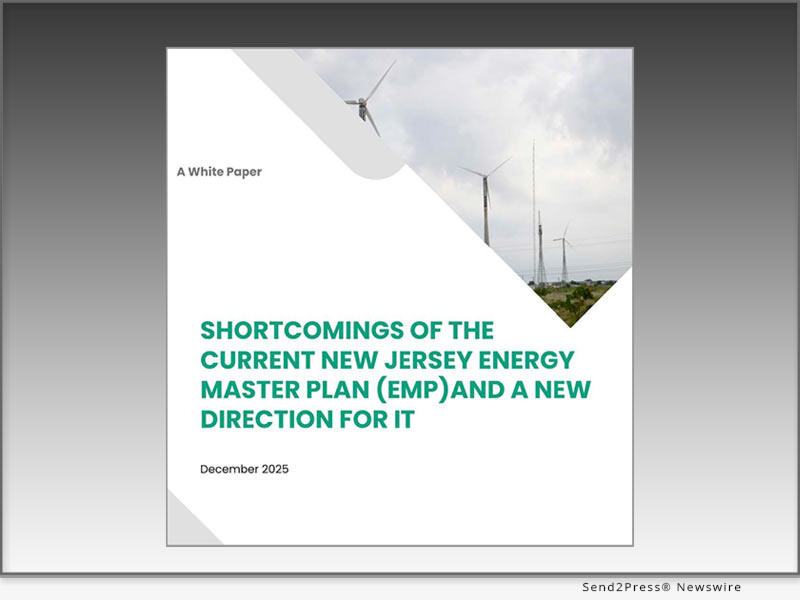
LONG BEACH ISLAND, N.J. /New York Netwire – National News/ — Save Long Beach Island, Inc. (Save LBI), a grassroots organization dedicated to sound energy policies and preserving our shore and ocean environment, today released a science-backed research paper to support Governor-elect Mikie Sherrill’s stated goals of “making energy more affordable and reliable” and “driving New Jersey forward with economic development and innovation.”
Entitled “Shortcomings of the Current New Jersey Energy Master Plan and a New Direction for it,” the 50-page document responds to Governor-elect Sherrill’s call for feedback and recommendations with a constructive, evidence-based critique of the current plan and a series of realistic measures the incoming administration can implement to ensure a reliable, affordable, and long-lasting supply of electricity while pursuing a practical and effective greenhouse-gas (GHG) strategy that does not place undue financial strain on NJ households. The white paper was delivered to Governor-elect Sherrill, members of her transition team, and the New Jersey State Legislature in early December and is available at https://www.savelbi.org/communications.)
“For too long, the State’s energy and climate planning has been based on slogans and unsupported claims of lower energy cost, job gains, and climate change benefit,” said Save LBI president Bob Stern, a Ph.D. scientist with deep expertise in energy and environmental policy. “It’s time for a change – time for New Jersey to move to a cost-effective strategy rooted in reality.”
The latest edition of the State’s Energy Master plan is unfortunately built around the conflicting goals of reducing the cost of electricity and addressing climate change, according to Stern. “Our white paper presents numerical evidence showing that neither of these goals can be met under the current Plan and refutes unsupported claims of energy cost savings, job gains, and real climate change benefit. Most important, we offer ideas for providing reliable and affordable electricity for New Jersey and developing realistic GHG avoidance measures – including a framework for identifying innovative measures that could be deployed widely around the globe – while creating long-term economic opportunity for New Jersey.”
Here’s a summary of the paper’s key conclusions:
* However well-intentioned, NJ GHG avoidance measures by themselves will have no discernible effect on global climate change. Based on current GHG-emission-trend modeling, even an aggressive New Jersey program would reduce a predicted 26-inch global rise in sea level by only one-hundredth of an inch by the end of the century (see pages 7-9 of the white paper for an eye-opening scientific analysis);
* New Jersey can have an impact on global climate change and create long-term economic opportunity in the State by redirecting current efforts toward identifying, promoting, and exporting innovative measures that can be adopted widely around the world. A modest statewide GHG reduction program is useful to show that NJ “has skin” in the global effort.
* The State should accept the reality that some elevation in sea level and other climate impacts are inevitable, but that we have time to deal with them and should start redirecting resources to coastal areas and implementing other resource-protection and -resiliency measures.
* A reliable, affordable, and long-lasting supply of energy can be achieved in NJ with only a small carbon-emission footprint through the combination of utility-scale solar and nuclear power and low-cost, high-efficiency natural gas.
* Offshore wind (OSW) projects do not make sense economically or environmentally for NJ, putting them directly at odds with the Governor-elect’s goal of reducing energy costs. OSW projects…
1. Are by far the costliest means of supplying electricity and guarantee a significant increase in statewide electric bills (pages 4-5 of the white paper provide an apples-to-apples “levelized-cost” comparison of various power generation sources showing the supply cost of offshore wind projects at four times that of combined cycle natural gas and more than twice that of utility-scale solar and nuclear plants);
2. Are the most expensive and ineffective way of avoiding GHG emissions. Even on a global scale, offshore wind is no panacea. Despite all the attention paid to OSW, it accounts for less than one percent of the world’s electric supply and displaces, at most, one-fourth of a percent of global GHG emissions. For real solutions to the climate problem, a focus on other measures is necessary.
3. Provide only a limited number of temporary construction jobs for New Jersey workers;
4. Require back-up systems that are often fossil fuel driven;
5. Introduce a host of other major tangible problems, including…
* Significant losses in the State’s bustling tourism sector;
* Impaired functionality of onshore radar systems used to defend our national airspace;
* Substantial harm to marine mammals, including the critically endangered North Atlantic right whale;
* Generation-long blight of the natural seascape and shore because current regulations do not require (or provide funding for) the removal of turbines at the end of their useful life.
“We appreciate Governor-elect Sherrill’s open-minded and collaborative approach to addressing New Jersey’s energy affordability crisis and other important issues,” Stern said. “It is our hope that the evidence presented in this white paper will stimulate reasoned discussions that lead to the adoption of a sound and sensible energy policy – one that that keeps the cost of electricity in check while encouraging innovative approaches to achieving meaningful progress on climate change.”
About Save LBI
Save LBI is a not-for-profit, non-partisan organization that has been active in ongoing litigation and other efforts to protect the coastal and marine environment from the senseless industrialization of our oceans. The organization is led by Beach Haven, N.J. resident Bob Stern, a Ph.D. scientist with experience in environmental planning and environmental law. He is a former manager of the U.S. Department of Energy office responsible for overseeing environmental protection related to energy projects and the Bureau of Air Quality Planning within the New Jersey Department of Environmental Protection (NJDEP). For more information on Save LBI and its efforts, click here: https://www.savelbi.org.
Contact: https://www.savelbi.org/contact
Learn More: https://www.savelbi.org/
This version of news story was published on and is Copr. © 2025 New York Netwire (NewYorkNetwire.com) – part of the Neotrope® News Network, USA – all rights reserved.
Information is believed accurate but is not guaranteed. For questions about the above news, contact the company/org/person noted in the text and NOT this website.
NEWS SOURCE: Save Long Beach Island (Save LBI). Story was sourced from a press release issued by Send2Press® and used with permission. View the original story at: https://www.send2press.com/wire/save-lbi-outlines-new-direction-for-new-jerseys-energy-plan-provides-recommendations-for-supplying-affordable-reliable-electricity-while-addressing-climate-change/